

Saltwater pools and chlorine pools both sanitize with chlorine. The difference is how chlorine is added. Saltwater pools generate chlorine automatically using a salt cell, while chlorine pools require manual dosing. Saltwater costs more upfront but usually requires less routine maintenance.
Table of Contents
What Is the Difference Between Saltwater and Chlorine Pools?
Roger’s Recommendation After 48 Years Building Pools
“In Texas, we recommend saltwater for homeowners who want lower routine maintenance. However, if the pool will sit unused for long periods or the budget is tight, a traditional chlorine system is still an excellent choice.”
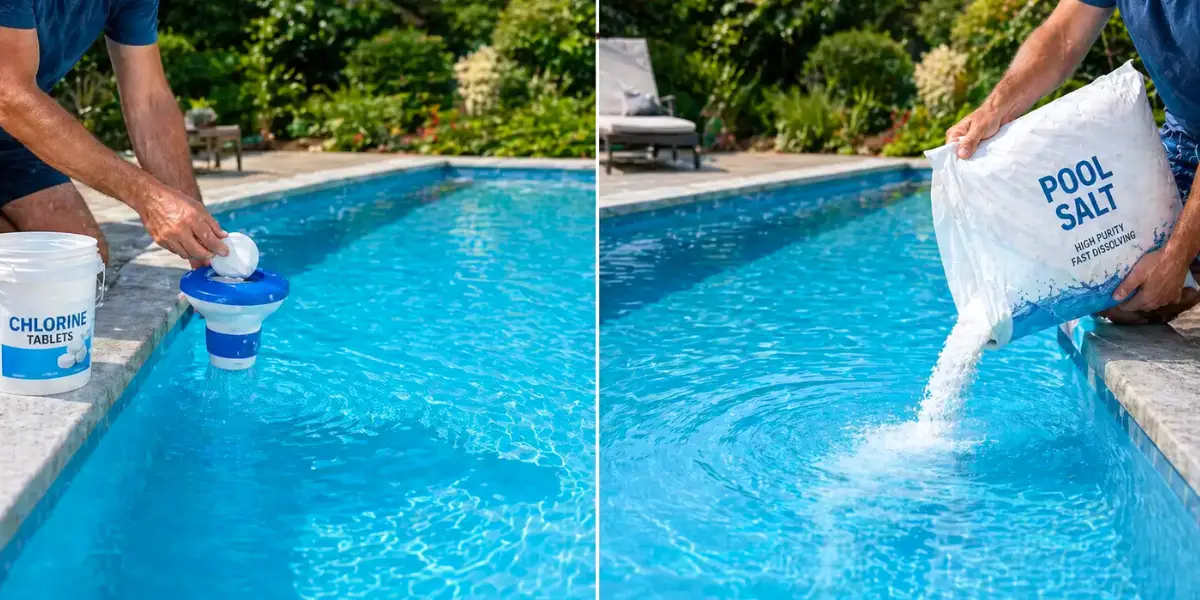
The biggest difference between chlorine and saltwater pools is how the system is run and how the water feels over time. Saltwater pools make chlorine automatically, which helps keep levels more stable with less daily work. Chlorine pools, on the other hand, need you to administer chemicals by hand, which gives you more direct control but also means you have to be careful when using them.
For homeowners, this difference shows up in everyday use. Saltwater pools feel smoother and need less upkeep, while chlorine pools have simpler systems that can be easier to change quickly when the water conditions change. It depends on how much time you want to spend maintaining your pool, how consistent you want the water, and how you want to utilize it in your climate.
How Do Saltwater Pools Work
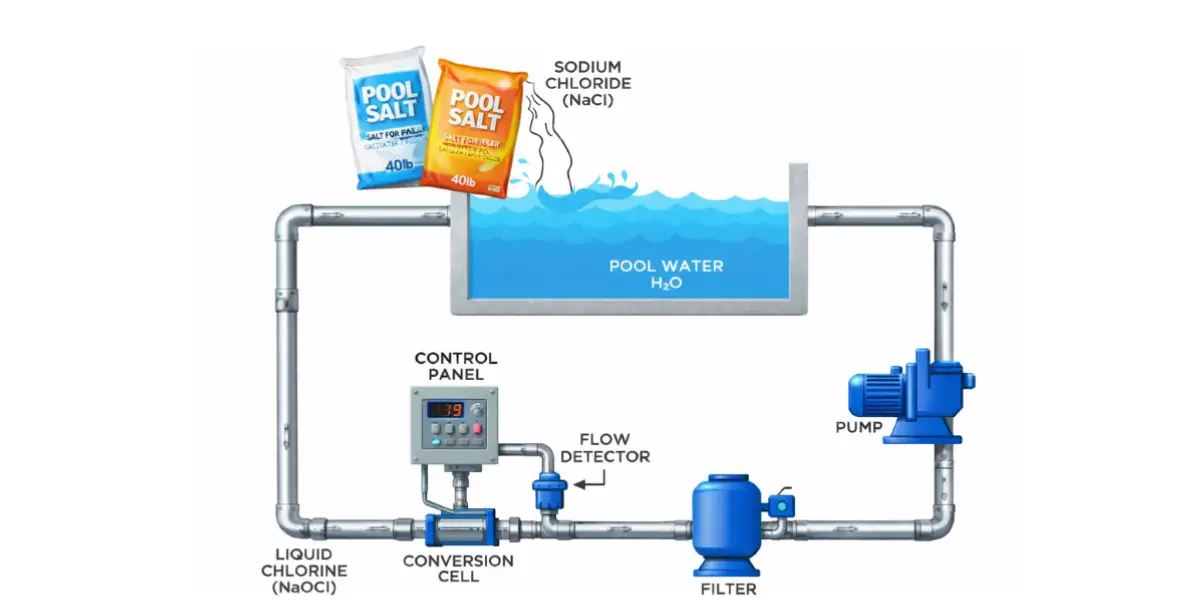
Saltwater pools generate chlorine automatically after an initial chlorine level is established through a process called electrolysis. A small amount of salt is added to the pool water, and as water passes through the generator cell, an electrical current converts salt into chlorine (hypochlorous acid), the same sanitizer used in traditional pools. This chlorine sanitizes the water and then gradually reverts back into salt compounds, allowing the cycle to continue. Because the system generates chlorine in small, consistent amounts, it helps maintain more stable water chemistry compared to manual dosing. But the system still needs to be watched over. To make sure it works properly, you need to check the salt levels, pH balance, and the state of the salt cell on a regular basis. In Texas, especially during the winter, the generator may not work as well or may not work at all when the water temperature drops. This means that extra chlorine may be needed to keep the water clean.
How Chlorine Pools Work
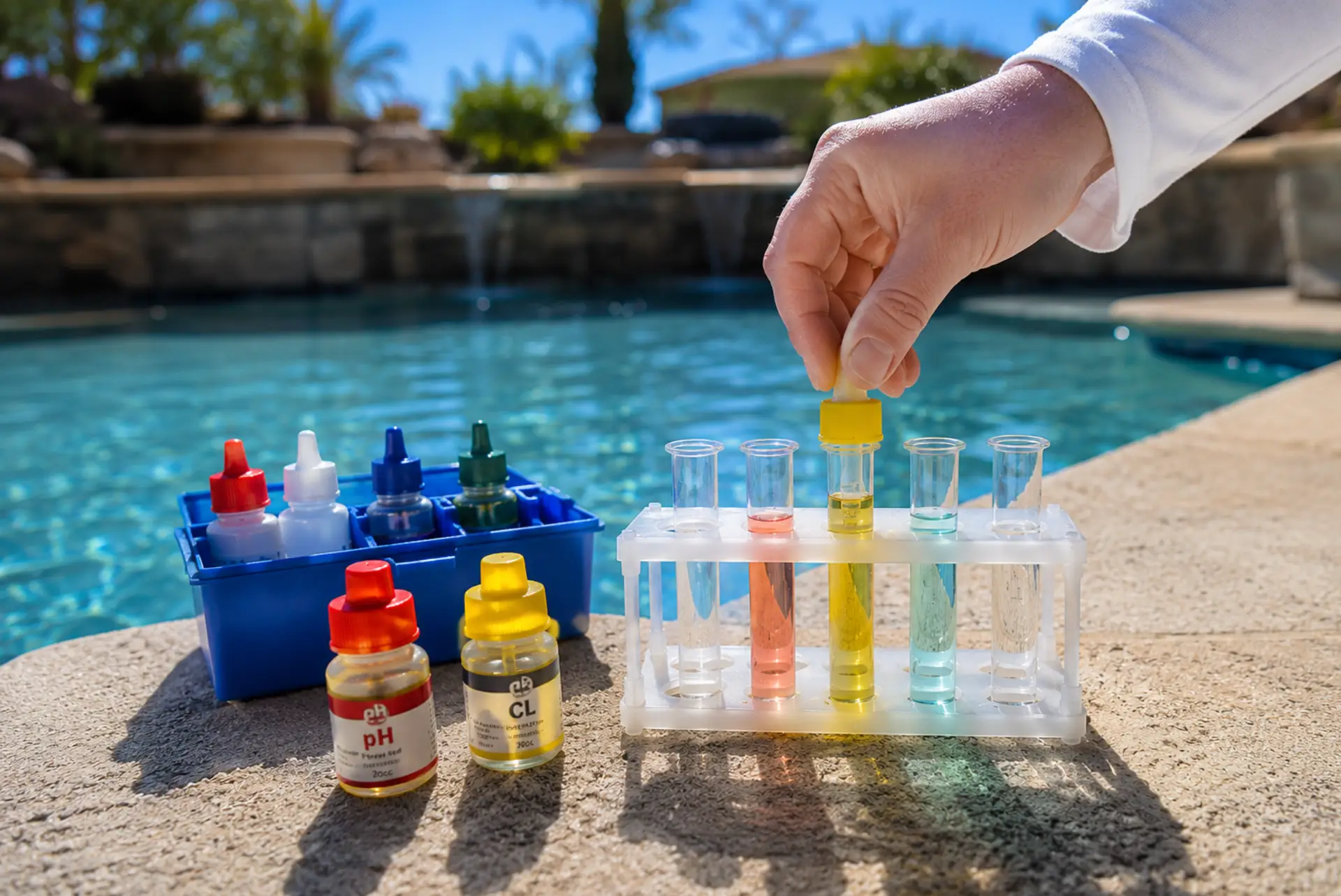
Chlorine pools require manual chlorine adding to maintain the water clean and safe, which is commonly done with tablets (in a floater or feeder), liquid chlorine, or granular shock. When chlorine is introduced to water, it destroys bacteria, algae, and other impurities via a chemical process that sanitizes it. When compared to saltwater systems, chlorine levels can change because of things like sunshine, heat, pool use, and debris. Homeowners in Texas may need to test and adjust levels multiple times a week to maintain optimal balance since the state’s high temperatures and intense sun exposure can break down chlorine more quickly. Regular testing is important to keep an eye on pH, chlorine, and alkalinity levels. Low levels can produce algae and dangerous water, while high levels can make the water smell bad and cause irritation. Chlorine pools need more upkeep, but they are easy to use, can be adjusted quickly, and work well in all kinds of weather.
pros and cons of saltwater swimming pools
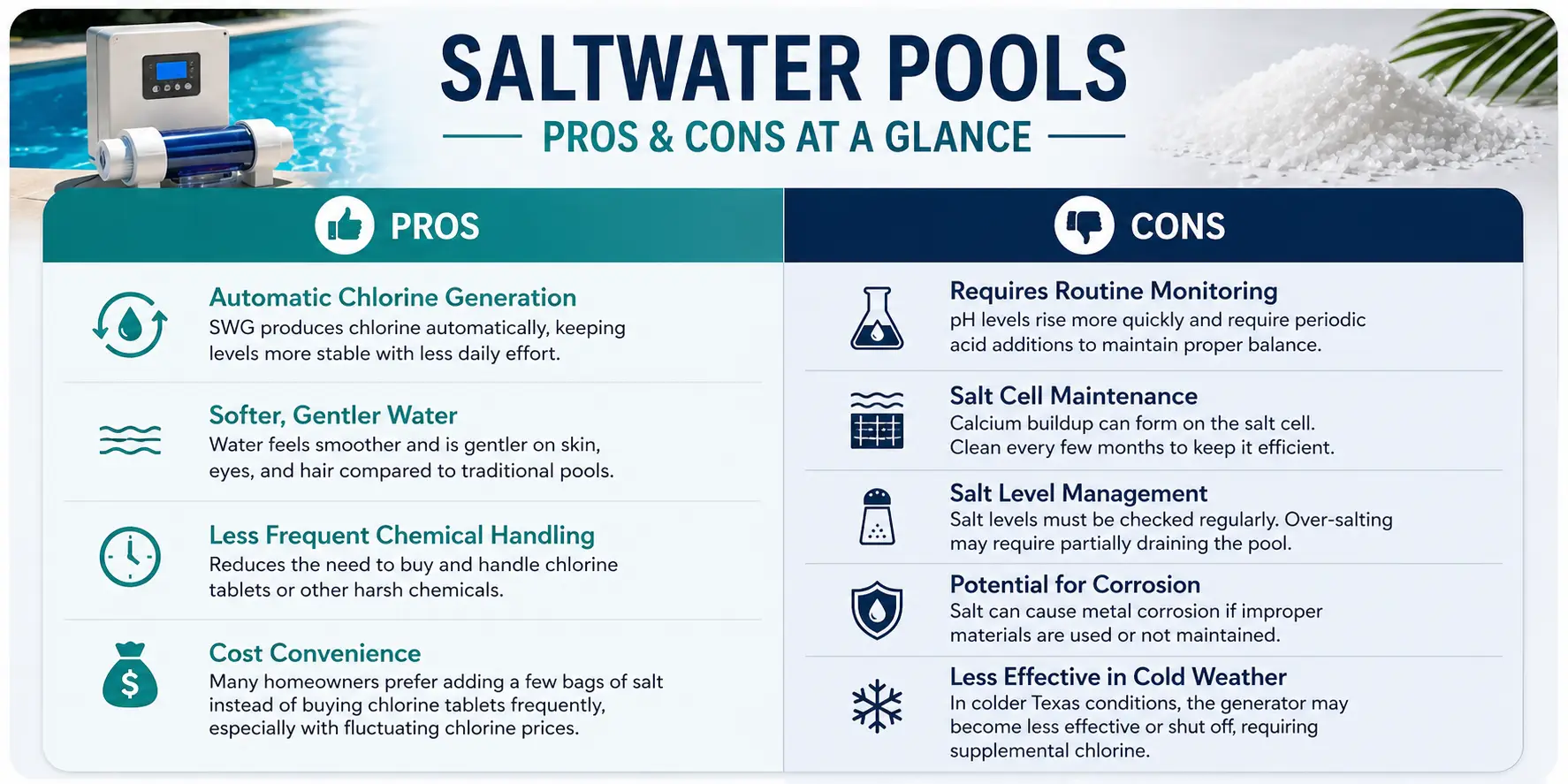
Saltwater pools use a salt chlorine generator (SWG) to produce chlorine automatically, which helps keep levels more stable and reduces the need for frequent chemical handling. Because chlorine is generated in small, consistent amounts, the water typically feels softer and is gentler on the skin, eyes, and hair compared to traditional chlorine pools. Many homeowners prefer adding a few bags of salt sometimes than buying and handling chemical and chlorine tablets, especially since chlorine prices fluctuate.
The saltwater system still requires routine monitoring. pH levels tend to rise more quickly, so periodic acid additions are needed to maintain proper balance. The salt cell can develop calcium buildup over time and should be cleaned every few months to keep the system working efficiently. Salt levels also need to be checked to avoid over-salting, which may require partially draining the pool. Salt can also cause metal corrosion if materials are improperly chosen. In colder Texas conditions, the generator may become less effective or shut off, meaning supplemental chlorine may occasionally be needed.
Chlorine Pool Pros and Cons
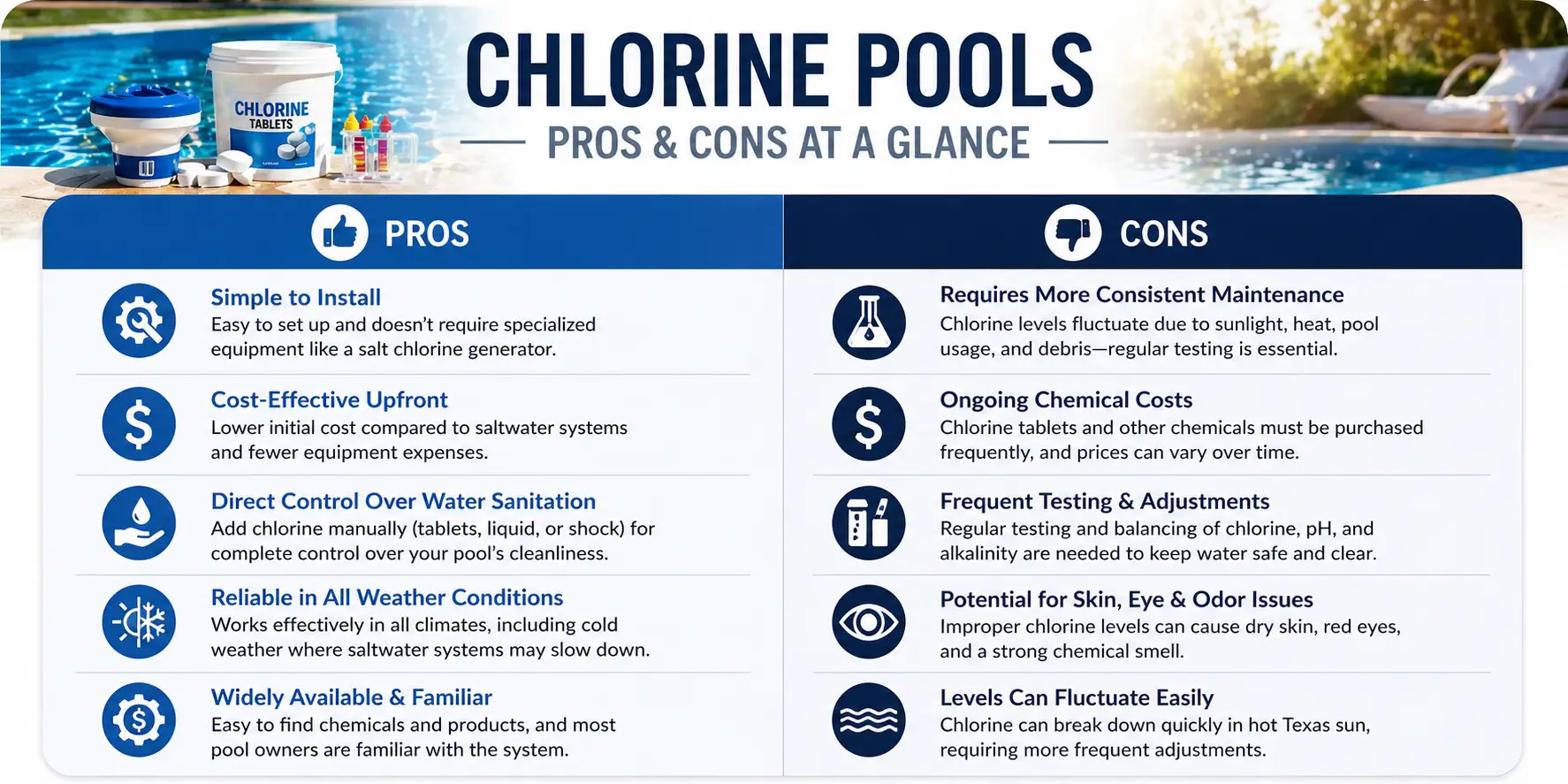
Chlorine pools remain the most common option because they are simple to install, cost-effective upfront, and don’t require specialized equipment like a salt chlorine generator. Chlorine is added manually using tablets, liquid, or granular shock, which gives homeowners direct control over water sanitation. This makes chlorine pools reliable in all weather conditions. Temperature swings are another important factor. While Texas is known for heat, extreme cold events, like the 2021 winter storm, show how quickly conditions can change, in this situation saltwater systems may slow down. However, chlorine pools require more consistent maintenance. Chlorine levels can fluctuate due to sunlight, heat, pool usage, and debris, especially in hot climates like Texas, so regular testing and adjustments are necessary to keep the water balanced. Ongoing costs can also add up, as chlorine tablets and other chemicals need to be purchased frequently, and prices can vary over time.
Comfort is another disadvantage. If chlorine levels are not properly monitored, they might result in dry skin, red eyes, and a strong chemical odor. These problems can be avoided with the right care, but they show how important it is to get regular care. In general, chlorine pools are easier to use and more flexible, and they cost less to set up. However, they need more regular upkeep and chemical management to keep the water clean.
The saltwater system still requires routine monitoring. pH levels tend to rise more quickly, so periodic acid additions are needed to maintain proper balance. The salt cell can develop calcium buildup over time and should be cleaned every few months to keep the system working efficiently. Salt levels also need to be checked to avoid over-salting, which may require partially draining the pool. Salt can also cause metal corrosion if materials are improperly chosen. In colder Texas conditions, the generator may become less effective or shut off, meaning supplemental chlorine may occasionally be needed.
Initial & Long-Term cost of chlorine pool versus salt water
When comparing saltwater vs chlorine pools, cost should be evaluated across upfront installation, ongoing operation, and long-term ownership. Chlorine pools typically have a lower initial cost, often 10–40% less, since they don’t require specialized equipment beyond standard feeders or manual dosing systems. In contrast, saltwater pools require a salt chlorine generator (SWG), control system, and sometimes upgraded components, adding anywhere from a few hundred to several thousand dollars upfront. However, the long-term cost picture is more nuanced. Chlorine pools require continuous purchases of chemicals such as tablets, liquid chlorine, stabilizer, and algaecides, with typical annual costs ranging from $300 to $900 depending on usage and local pricing. Saltwater pools reduce this recurring expense by generating chlorine from salt, often lowering chemical costs to roughly $100 to $400 per year. That said, these savings are partially offset by additional factors: salt systems consume electricity, require the pump to run longer, and the salt cell must be replaced every 3–7 years, typically costing $300 to $900. There are also potential hidden costs, such as corrosion-related wear on metal components, heaters, or fixtures if the system is not properly designed for salt. In real-world scenarios, the financial difference often comes down to usage and local conditions: heavy pool use and higher chlorine prices tend to favor saltwater systems over time, while smaller pools, infrequent use, or low-cost chlorine access may make traditional chlorine systems more economical. Over a 10–15 year period, saltwater pools can become slightly more cost-efficient in operation, but total cost parity depends on equipment lifespan, maintenance habits, and how well corrosion risks are managed.
Salt water pool vs chlorinated pool in maintenance
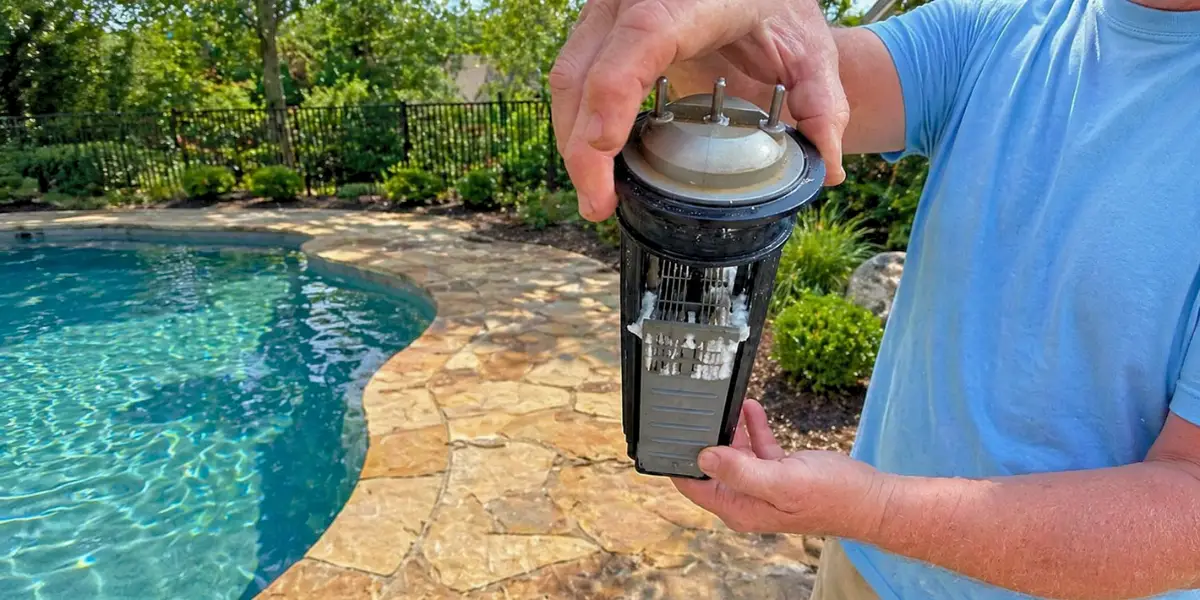
Daily differences between saltwater and chlorinated pools become noticeable during maintenance. Maintaining the right water pH is still important for saltwater pools, even though chlorine needs to be added less often. Homeowners usually check levels weekly and add acid since pH rises. Every 2–3 months, the salt cell should be inspected and cleaned to prevent formation, another thing to keep in mind that chlorine is only generated when the pump is running.
Chlorine pools require more daily maintenance. Chlorine must be added regularly using tablets, liquid, or shock, and levels can fluctuate quickly due to heat, sunlight, and pool usage. This typically means testing the water 2–3 times per week during peak season and making frequent adjustments to keep it balanced. Pool owners find this routine repetitive, especially during hot weather or after storms.
In real-world use, saltwater pools reduce how often you handle chlorine but still require periodic system maintenance, while chlorine pools involve more frequent testing and adjustments. The choice comes down to whether you prefer a more automated system with occasional upkeep or a manual approach that requires regular attention.
Get Expert Advice from a Pool Specialist in Texas panhandle
How Texas Weather Affects Your Swimming pool

The weather in Texas has a direct impact on how pool systems function and how frequently they require maintenance, particularly in regions like the Panhandle. It is more difficult to maintain constant sanitizer levels without frequent modifications since prolonged heat and intense sunlight increase chlorine consumption. In many parts of Texas, there are well over 200 sunny days each year, which puts additional strain on pool sanitation. Storms and wind carry dust and debris into the pool, making filtration and water clarity more challenging. Evaporation can also disrupt chemical balance by lowering water levels and concentrating chemicals.
A saltwater system’s chlorine production can help level off the changes, especially in the warmer months, but its efficiency is pump-dependent and has a limit.Traditional chlorine pools, while more manual, allow for quicker corrections when water conditions change and are not impacted by temperature in the same way.
In real life, the climate in Texas doesn’t really support one system over another; it just changes how each system acts. Which one is better depends on how much control you want, how often you’re ready to make changes to your pool, and how you use it all year.
So, What Pool is Better: Saltwater or Chlorine?
It depends on how much you want to spend, how easy you want to keep up, and how you plan to use your pool. Saltwater pools have more stable chlorine levels, softer water, and less need for chemical maintenance, which makes them a good choice for people who want a system that works on its own. When compared to other options, chlorine pools are cheaper up front, easier to use, and allow for quick changes, especially when the weather changes.
The choice between the two systems relies on how much time you want to spend maintaining your pool, your budget, and whether you want control or comfort.
Can you convert a chlorine pool to saltwater pool?
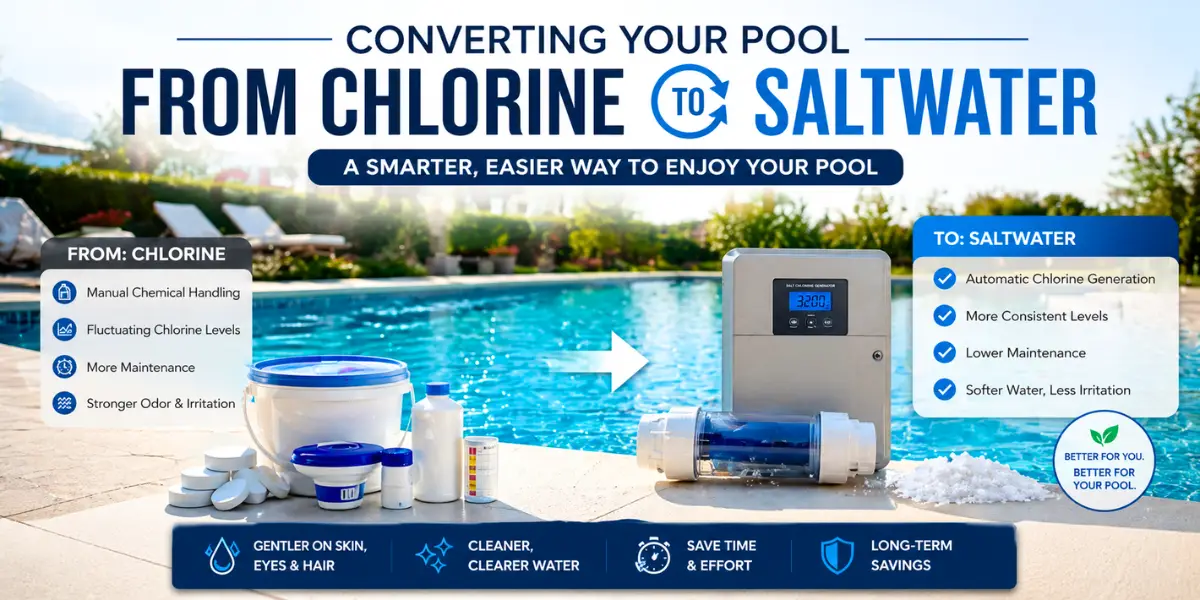
Yes, most chlorine pools can be converted to saltwater. The process typically involves installing a salt chlorine generator (SWG), adding pool-grade salt, and balancing the water chemistry. In most cases, your existing pump and filter can remain, but heaters and other metal components should be checked to ensure they’re compatible with salt systems. Keep in mind that saltwater pools still use chlorine, the generator simply produces it automatically. You’ll need to establish the initial chlorine level, and additional chlorine may still be required after heavy pool use or storms. Salt cells also need periodic cleaning and replacement, and saltwater pools often require more frequent pH adjustments. For many homeowners, the reduced daily chemical handling makes the conversion worthwhile, but regular maintenance is still essential.